
Exploring the Role of Organic Wines on Long Island 2026
January 3, 2026
Awakening the Sandbar Vine
Organic Long Island wine and the rebirth of regional terroir
Long Island organic vineyards once stood in the shadow of bigger American regions, yet quiet perseverance reshaped that narrative. Growers began embracing sustainable wine farming Long Island practices, allowing maritime breezes and sandy loam to headline every pour. Their shift from chemical inputs to compost teas unlocked flavors of beach plum, wild herb, and crushed shell now celebrated by sommeliers nationwide. Voices in tasting rooms speak of an emerging organic wines movement on Long Island that honors cultural heritage while safeguarding the environment. By spotlighting organic Long Island wine, drinkers reconnect with a coastline that had been hiding in plain sight.
Terroir rebirth finds a modern partner in technology, especially when enthusiasts choose to order organic wine online rather than drive from winery to winery. Digital transparency helps consumers verify certifications, sulfite levels, and soil stewardship reports before adding bottles to a cart. This virtual bridge fuels demand for pesticide-free vintages, rewarding growers who nurture soil health in vineyards instead of relying on synthetic rescue. As momentum builds, tasting rooms increasingly share ecosystem data alongside flavor notes, giving guests a richer sense of place. The result is a feedback loop where conscious buyers inspire even deeper ecological commitments.
Climate-smart cabernet franc and merlot along the North Fork
The North Fork’s narrow peninsula funnels ocean winds that moderate summer heat, allowing certified organic cabernet franc to ripen slowly without sunburn. Local viticulturists now plant wider row spacing, capturing airflow that discourages mildew naturally. These climate-smart strategies reduce irrigation needs, lowering both water use and energy consumption for pumps. Growers also graft heat-tolerant rootstocks, building climate-resilient grape varieties able to withstand shifting weather patterns. Organic merlot from North Fork now shows bracing acidity and refined tannins once thought impossible in such a humid setting.
Winemakers experimented with mixed-cover crops like crimson clover and vetch, creating living mulch that cools roots and enriches nitrogen. This regenerative approach improves organic matter, helping vines endure saline winds that define the sandbar microclimate. Fermentation protocols stay low-intervention, with native yeast revealing pepper, cedar, and black cherry in every sip. Consumers exploring red wine online quickly recognize these bottles for purity and energy, distinguishing them from warmer-climate counterparts. Small-lot production keeps quality high while nurturing a sense of intimacy between vineyard and glass.
From salt air to soil health how maritime breezes shape pesticide-free vintages
Maritime fog drifts across rows at dawn, depositing trace minerals that echo briny surf in the final wine. This daily mist allows growers to delay irrigation, encouraging deep root exploration and resulting in nuanced minerality. With water stress minimized, vines resist disease naturally, reducing the temptation to spray systemic fungicides. Producers monitor leaf wetness hours instead, timing organic sulfur applications precisely, thereby protecting beneficial insects. The outcome is a line of pesticide-free vintages reflecting both land and sea.
Soil tests reveal climbing microbial diversity, a direct benefit of reduced chemical input. Mycorrhizal fungi networks transport micronutrients through sand and silt, amplifying each vine’s resilience. Cover crop roots break compaction, letting oxygen penetrate deeper horizons and stimulate earthworm activity. Such flourishing biology supports balanced ripening, making unnecessary the acid or tannin adjustments common in conventional cellars. Drinkers notice vibrant aromas-sea spray, lime zest, and honeysuckle-testimony to thriving terroir rather than winemaking trickery.
Biodiversity corridors and pollinator rows redefining vineyard ecosystems
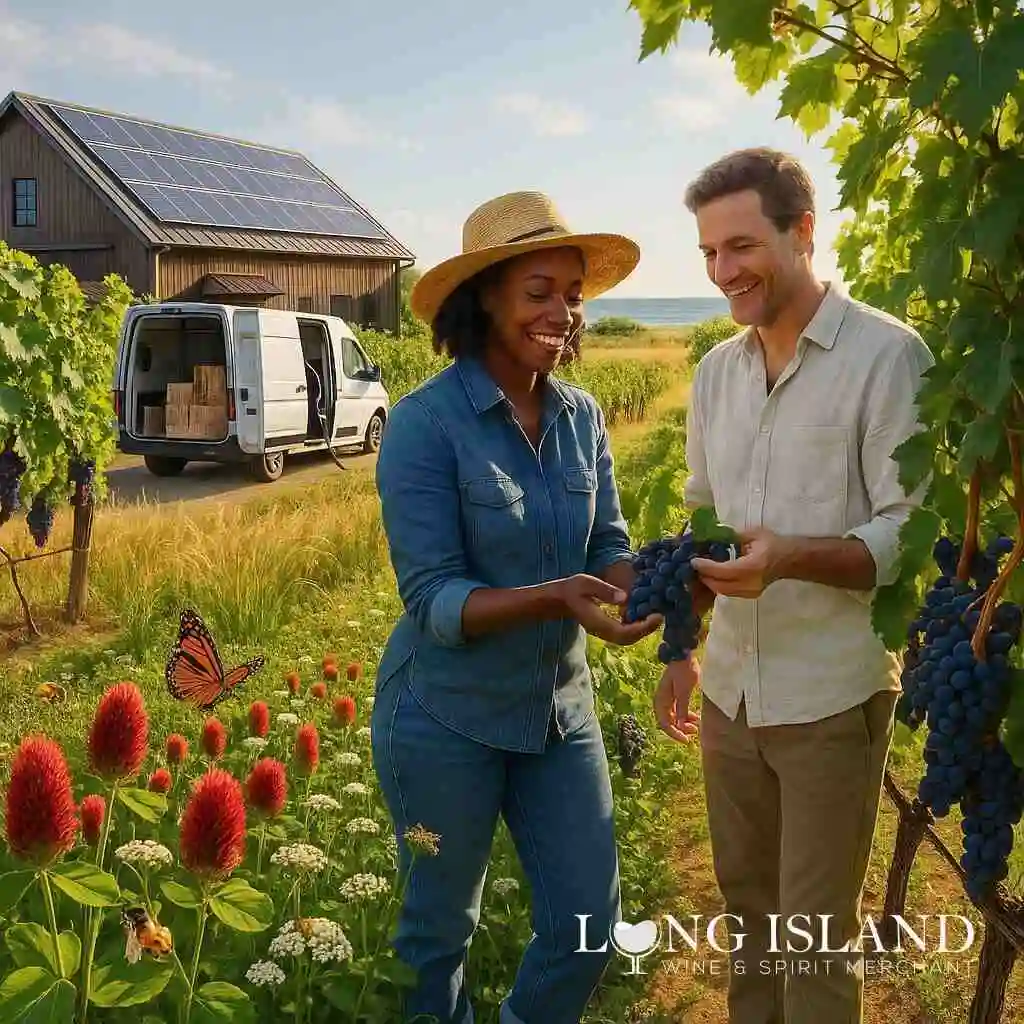
Forward-thinking farms now designate corridors where native grasses, goldenrod, and milkweed grow unchecked, luring butterflies and predatory wasps that manage pests organically. These strips double as runoff buffers, capturing nutrients before they reach Long Island Sound. Vineyard biodiversity practices extend between every sixth row, where flowering buckwheat and alyssum attract hoverflies hungry for grape leafhopper larvae. Birds of prey boxes pepper fence lines, offering owls and kestrels sanctuary to patrol at dusk. Together, these natural allies replace chemical insecticides in a harmonious choreography.
Pollinator rows also support biodynamic wineries New York producers who time sowing with lunar cycles and craft compost preparations from chamomile or nettle. Although mystical at first glance, field data show measurable gains in leaf chlorophyll and berry anthocyanins. Visitors learn how these ecosystems function through interactive vineyard walks, deepening respect for agriculture’s living fabric. Later, they search online liquor store inventories for bottles made under similar principles, ensuring their purchase fuels ecological stewardship. In this way, Long Island becomes a model of regenerative abundance, growing grapes while reviving wildlife populations.
Biosphere in the Bottle Sustainable Viticulture Unpacked
Regenerative agriculture wines and living soils
Regenerative growers on Long Island treat each vineyard row as a living sponge rather than a simple grape factory. Compost, seaweed, and biochar replace synthetic nitrogen, allowing micro-organisms to flourish and feed vines slowly. Earthworms aerate the sandy loam, creating channels that hold precious rainwater during dry spells. Consumers searching for an organic wine collection in Long Island often discover these wines taste brighter because healthy soils regulate vine nutrition naturally. When roots dig deeper, flavors echo seaside scrub, salt grass, and ripe peach in every sip.
The regenerative philosophy also values carbon drawdown. Cover crops capture atmospheric CO₂ and lock it underground, turning vineyards into quiet climate allies. Growers mow rather than till, preserving fungal networks that ferry micronutrients between plants. This biological web boosts disease resistance, reducing copper and sulfur sprays while safeguarding pollinators. Drinkers gain confidence knowing their favorite bottle nurtures ecosystems instead of depleting them.
Low-intervention chardonnay versus conventional chemistry
Low-intervention chardonnay begins with hand-picked fruit fermented by native yeast, refusing lab-bred cultures that can mute terroir. Winemakers eschew powdered tannin and bentonite, accepting slight haziness as proof of authenticity. Stainless tanks stay cool through geothermal energy, ensuring crisp acidity without petrochemical refrigerants. Visitors comparing low-intervention bottles learn how minimalist cellaring yields layers of lemon curd, flint, and sea spray. By contrast, conventional chardonnay may rely on enzymes, oak chips, and heavy filtration that strip nuance.
Savvy shoppers often explore comprehensive wine services for conscious drinkers to build mixed cases highlighting these natural techniques. Algorithms suggest bottles based on sustainability metrics and sensory profiles, helping households align taste with values. Each recommendation comes with lab reports on sulfite levels and residual sugar, offering transparency that large brands rarely match. The result is an informed community that rewards craftsmanship over chemistry, pushing more vineyards toward cleaner practices.
Biodynamic wineries New York and lunar farming lore
Biodynamic estates take organic rules further by timing sprays, pruning, and harvest according to lunar phases. Field preparations made from yarrow, dandelion, and quartz enhance microbial activity and root vitality. Critics once dismissed this as folklore, yet peer-reviewed studies now document higher phenolic complexity in biodynamic grapes. Tour guides explain how cosmic rhythms influence sap flow, captivating visitors eager for deeper connection with nature. These stories turn a tasting flight into a meditation on planetary cycles.
Transparency remains crucial, so many estates link QR codes on back labels to pages detailing cosmic calendars and soil assays. Curious patrons reading about this Long Island green wine store discover side-by-side comparisons of biodynamic and conventional vineyard data. Charts show improved water infiltration, richer humus, and increased bird counts within biodynamic blocks. Such evidence converts skeptics, illustrating that mystical language often masks sound ecological science.
Carbon-neutral wine shipping and cellar energy innovation
Shipping heavy glass across long distances once undermined wine’s green credentials, yet logistics are rapidly evolving. Lightweight bottles, recycled pulp shippers, and route optimization software now slash emissions for orders leaving Commack. Order Alcohol Online invests in regional fulfillment hubs and electric vans, shrinking its delivery footprint even further. A recent upgrade to solar-powered temperature control keeps wine safe without fossil fuels, safeguarding both flavor and planet. Customers track their package’s carbon score, turning each purchase into a measurable climate action.
These advances align with statewide goals, as outlined in the guide on carbon-neutral wine delivery standards in NY. Cellars adopt geothermal wells to stabilize barrel rooms year-round, reducing reliance on energy-hungry chillers. Smart sensors adjust airflow only when humidity spikes, preserving cork integrity while trimming electricity bills. Together, production and distribution reforms prove eco-luxury is possible when innovation meets commitment.
Tasting the difference in sulfite-free rosé flights
Sulfite-free rosé from Long Island glows pale salmon, its clarity achieved through patience rather than additives. Winemakers cool-settle juice overnight, allowing solids to sink before a gentle racking. The resulting wine bursts with watermelon, rose petal, and sea-salted strawberry unmasked by chemical preservatives. Tasters often detect a softer mouthfeel and lingering minerality that conventional counterparts cannot match. These subtleties reward mindful sipping and encourage conversation about ingredient transparency.
Curious drinkers can refine preferences by taking a personalized wine taste quiz for eco bottles. The short survey evaluates palate sensitivity, food habits, and sustainability priorities, recommending sulfite-free options that fit each profile. Results might pair a delicate pink blend with local goat cheese or suggest chilling temperatures for optimal aromatics. By merging data science with artisanal craft, the platform turns discovery into delight, while reinforcing trust in clean winemaking.
Clicking for Clean Wine The Digital Marketplace
Order organic wine online at an online liquor store built on green logistics
Order Alcohol Online positions itself as a climate-savvy online liquor store where customers happily order organic wine online without second-guessing the footprint. The platform’s warehouse in Commack runs on renewable energy, while recycled pulp shippers cradle every bottle. Shoppers can track sustainability metrics alongside flavor notes, turning procurement into a transparent ritual. Because the store curates only temperature-controlled routes, delicate terroir nuances survive the journey. Explore the ethos directly through the Long Island Wine & Spirit Merchant main site and notice how every click reinforces responsible commerce.
Responsible buying extends beyond transport efficiency. Detailed product pages highlight vineyard certifications, sulfite counts, and packaging weights, letting eco-minded patrons compare options quickly. Smart filters sort wines by farming style, encouraging switches from conventional labels to biodynamic alternatives. As a result, green logistics become a value driver rather than a hidden afterthought. The seamless checkout reinforces trust, inspiring repeat orders while bolstering regional organic growers.
Eco-friendly wine delivery and carbon offsets to your doorstep
Sustainability goals do not end once boxes leave the loading dock. Couriers leverage electric vans for wine delivery, shrinking both emissions and neighborhood noise. When longer routes demand traditional vehicles, Order Alcohol Online invests in verified carbon offsets, balancing each mile traveled. Shipping notifications display these offset figures, turning mundane tracking into an educational touchpoint. The practice assures customers that conscience and convenience can coexist. Order through the green alcohol delivery near Commack NY program to witness emissions data in real time.
Packaging design follows the same ethos. Lightweight glass bottles reduce freight weight, while molded fiber dividers eliminate single-use plastic. Returnable ice-pack sleeves keep summer shipments safe yet reusable, promoting circularity over disposal. Customers may even schedule consolidated deliveries, reducing vehicle trips and porch clutter simultaneously. These collective choices weave a low-carbon network that starts on Long Island and touches doorsteps nationwide.
Custom cases of organic wine and algorithmic curation with the wine taste quiz
Many shoppers crave discovery but lack hours to research every bottle. Order Alcohol Online responds with an interactive wine taste quiz, translating palate preferences into algorithmic suggestions. Results feed directly into builder tools for custom cases of organic wine, ensuring each shipment reflects individual ethics and flavors. Users adjust price limits, grape varieties, and sulfite thresholds, receiving instant recommendations from regenerative producers. The intuitive journey reimagines curation for busy households, marrying data science with craftsmanship. Check out the custom sustainable wine cases in New York feature to see the algorithm in action.
Personalization does not mean isolation. Saved taste profiles evolve as drinkers log reviews, creating feedback loops that help the system learn in real time. Seasonal prompts introduce new vintages aligned with climate and cuisine, keeping cellars fresh without guesswork. Because selections favor smaller estates, every case supports independent farmers pushing sustainable viticulture forward. The result is a pantry filled with intention rather than impulse buys.
Alcohol bottle engraving and organic wine gift boxes for conscious giving
Gifting sustainably crafted wine turns an ordinary present into a story of stewardship. Order Alcohol Online offers precision alcohol bottle engraving, enabling patrons to etch personal messages while avoiding wasteful gift cards. Pair the engraving with an organic wine gift box lined in compostable material, and a once-fragile shipment transforms into a keepsake. These upgrades add emotional weight without adding landfill burden. Discover options through the sustainable wine gift box service on Long Island and elevate your next celebration.
Corporate clients also benefit. Bulk engraving allows businesses to replace generic swag with meaningful, eco-friendly gestures. Detailed provenance sheets accompany each bottle, showcasing soil practices, carbon-neutral logistics, and tasting notes. Recipients gain a memorable experience alongside environmental insight, strengthening brand goodwill. Such conscious gifting proves luxury and responsibility are no longer mutually exclusive.
Local organic wine clubs that bridge vineyard and living room
Recurring memberships keep curiosity alive while guaranteeing farmers a predictable revenue stream. Order Alcohol Online curates local organic wine clubs, shipping themed packs that highlight vineyard biodiversity practices each cycle. Exclusive access to limited releases fosters community, while virtual tastings connect winemakers with subscribers. Members discuss soil health, fermentation experiments, and pairing ideas, turning casual sipping into participatory learning. For deeper context, read how digital sales optimize New York wine scene innovations in this industry overview.
Community extends offline as well. Club participants receive invitations to North Fork vineyard walks, partnering with growers for pruning workshops and beach cleanups. These experiences translate abstract sustainability claims into tangible action, reinforcing loyalty. Because shipments scale with membership density, delivery routes consolidate naturally, shrinking the program’s carbon intensity. The cycle of education, enjoyment, and environmental care completes the marketplace’s clean-wine vision.
Beyond the Barrel Coastal Pairings and Future Pathways
Organic wine and seafood pairing in a farm-to-bottle experience
Long Island chefs now build menus around organic wine and seafood pairing because both emerge from the same tidal rhythms. Local striped bass, kissed by saline currents, finds harmony with citrus-laced organic Long Island wine grown only miles inland. This farm-to-bottle wine experience highlights how Long Island wine terroir mirrors coastal flavors in every sip. Sommeliers explain that sea minerals absorbed by vines echo the briny finish of littleneck clams, creating an effortless bridge between plate and glass. Guests leave convinced that sustainable dining begins with regional ingredients nurtured under the same sky.
Seasonal celebrations extend the pairing conversation beyond restaurants. Community suppers host interactive stations where fishermen shuck Peconic Bay scallops while vintners pour chilled organic sparkling wine New York fans adore. Storytelling anchors each toast, showing how sustainable wine farming Long Island methods protect estuaries that feed both vines and seafood. Volunteers distribute recipe cards featuring low-intervention chardonnay butter sauces, turning complex gastronomy into home-kitchen reality. Through shared meals, neighbors taste the environmental dividend of buying clean wine.
Small batch organic riesling meeting North Shore oysters
North Shore oyster beds thrive where freshwater springs meet Atlantic tides, yielding bivalves with delicate sweetness and bright salinity. Small batch organic riesling from Long Island organic vineyards mirrors that profile with razor-edged acidity and subtle stone fruit. When sommeliers frame this pairing, they emphasize regenerative agriculture wines that rely on cover crops, not chemical salts, to achieve mineral length. The conversation shifts from tasting notes to ecosystem services as diners learn how vineyard biodiversity practices reduce runoff that can smother oyster larvae.
Tasting rooms now host oyster-and-riesling flights every weekend, offering reusable shells as educational props. Visitors compare texture shifts as the wine warms, discovering how small variations in temperature reveal hidden floral tones. Educators explain that such nuance survives because growers avoid aggressive filtration, preserving natural proteins that enhance mouthfeel. Patrons then order organic wine online for doorstep arrival, knowing eco-friendly wine delivery maintains cold-chain integrity ideal for shellfish nights at home.
Natural wine movement on Long Island and tourist tasting trails
The natural wine movement on Long Island fuels a blossoming tourism circuit that rivals European countryside adventures. Bike paths link beach hamlets with cellar doors pouring organic wine tasting flights under cedar pergolas. Travelers stop at apiary kiosks, sampling raw honey before sipping pesticide-free vintages that rely on bees for pollination. Guides share maps highlighting green winery tourism Long Island spots where solar panels power presses and wetlands frame picnic lawns.
Local organic wine clubs amplify the journey by offering members priority seats on tasting buses that run on biodiesel. During transit, educators discuss sulfite-free rosé online trends and explain how carbon-neutral wine shipping complements low-emission travel. Back at home, club subscribers receive virtual vineyard walks, reinforcing memories while deepening knowledge. Through continuous engagement, visitors become ambassadors who champion biodynamic wineries New York residents once considered niche.
Green winemaking practices as a blueprint for climate-resilient grape varieties
Growers view green winemaking practices as both ethical mandate and survival toolkit. Compost teas, biochar, and cover crop cocktails build soil health in vineyards, fortifying roots against erratic weather. Researchers monitor sap flow to identify climate-resilient grape varieties capable of thriving under warmer nights and heavier downpours. Trials already show certified organic cabernet franc holding acidity despite heat spikes, while organic merlot from North Fork resists mildew without copper overload.
Consumers eager to taste innovation explore climate-smart cabernet options on Long Island, finding vibrant reds fermented with native yeast. Winemakers bottle these experiments in lightweight glass, supporting carbon-neutral wine shipping that slashes freight emissions. Educational neck tags outline data on water savings, drawing a direct line from vineyard science to glass integrity. Such transparency builds trust, proving that environmental stewardship produces measurable flavor dividends.
Charting the next wave of sustainable sips and community stewardship
Forward momentum depends on collective action, not isolated excellence. Producers now collaborate on regional research labs testing drought-tolerant clones and sharing open-source fermentation protocols. Retailers join the mission by curating custom cases of organic wine that spotlight each breakthrough, allowing households to taste progress year after year. Thoughtful shoppers add organic wine gift boxes to celebratory calendars, giving friends a tangible stake in Long Island sustainable viticulture.
Order Alcohol Online quietly coordinates these efforts, weaving together eco metrics, storytelling, and seamless logistics. Customers can bundle regenerative reds with artisanal organic dessert wine or mix an adventurous set featuring low-intervention chardonnay alongside small batch riesling. Each delivery arrives through eco-friendly wine delivery routes, reinforcing responsible habits. The cycle of education, enjoyment, and environmental care ensures that future generations will raise glasses filled with clean, expressive, and community-driven wine.
 Frequently Asked Questions
 Frequently Asked Questions
Question: How can I order organic Long Island wine online from your Commack-based online liquor store?
Answer: Ordering is simple. Visit our Order Alcohol Online website, type organic Long Island wine into the search bar, or filter by farming style. Each bottle page displays vineyard certifications, soil health reports, sulfite counts, and packaging weights, so you can verify that you’re supporting sustainable wine farming Long Island producers. Add your selections to the cart, choose eco-friendly wine delivery at checkout, and we ship anywhere in the 50 states using recycled pulp shippers and carbon-neutral routes. You’ll receive tracking links that show real-time temperature and emission data, ensuring terroir purity from sandbar vine to your doorstep.
Question: What sets your certified organic cabernet franc and organic merlot from the North Fork apart, and are they available for nationwide delivery?
Answer: These reds come from Long Island organic vineyards that rely on cover crops, compost teas, and sea-breeze ventilation rather than synthetic sprays. The certified organic cabernet franc shows bright cranberry, pepper, and crushed shell, while the organic merlot from North Fork delivers bracing acidity and refined tannins-rare for humid climates. Because we specialize in carbon-neutral wine shipping, you can enjoy these climate-resilient grape varieties in any of the fifty states without sacrificing freshness or sustainability values.
Question: Your blog Exploring the Role of Organic Wines on Long Island 2026 mentions low-intervention chardonnay and sulfite-free rosé online. How do you protect these delicate, pesticide-free vintages during transit?
Answer: Low-intervention whites and sulfite-free rosé demand strict temperature control, so our warehouse in Commack runs on solar-powered climate systems that pre-chill every order. Lightweight glass minimizes heat retention, while insulated pulp shippers and reusable ice-pack sleeves keep bottles between 55-65 °F. Route-optimization software limits transit time, and verified carbon offsets cover any remaining emissions. The result is a bottle that tastes like it just left the cellar-layered with lemon curd, sea spray, watermelon, and rose petal-without the carbon guilt.
Question: Do you offer custom cases of organic wine or local organic wine clubs that highlight Long Island sustainable viticulture and vineyard biodiversity practices?
Answer: Absolutely. Take our interactive wine taste quiz, and our algorithm will curate custom cases of organic wine tailored to your palate, price range, and sustainability priorities. If you prefer recurring discovery, join one of our local organic wine clubs. Each shipment features themed packs-think small batch organic riesling with North Shore oysters or natural wine movement on Long Island tasting flights-and includes virtual meet-ups with the growers who champion cover-crop corridors and pollinator rows.
Question: Can I send organic wine gift boxes with alcohol bottle engraving for a farm-to-bottle wine experience that pairs well with Long Island seafood?
Answer: Yes. Select an organic sparkling wine New York bottling or an artisanal organic dessert wine, click Add Gift Box, and choose alcohol bottle engraving to personalize the message. We line each organic wine gift box with compostable material and include pairing cards that match the bottle with striped bass, Peconic Bay scallops, or other coastal favorites. Whether it’s a birthday, wedding, or corporate thank-you, your recipient gets a memorable farm-to-bottle wine experience that celebrates Long Island wine terroir and sustainable dining.


